_画板-111.png)
The ‘Spring Flush’ Fix: Unlocking Azelaic Acid in Hydrocolloid Formulations for the Anti-Redness Niche
_画板-1-1-300x300.png)
Alps Medical
15 Years of Acne Patch Factory Manufacturing and Wholesale
Table of Contents
March 2026 is here. For the skincare market, this means one thing: the “Spring Flush” season has begun. High pollen counts and erratic humidity levels are currently triggering a massive consumer demand for anti-redness and soothing solutions. If your product line currently relies solely on standard Salicylic Acid patches, you are leaving significant Q2 revenue on the table. Consumers with histamine-triggered sensitivity don’t need “drying”—they need “calming.”
At DOTDOT, we see this seasonal gap every year. Brands are too slow to pivot because traditional manufacturing moves at a glacial pace. By the time a standard factory finishes a formulation run, spring is over. This is why we are pushing the Azelaic Acid Hydrocolloid Patch as the critical SKU for the anti-redness niche this season.
This comparison illustrates the core value proposition: You can test the Azelaic Acid niche this season with minimal capital risk. While competitors wait for their Q4 production runs, you can be on shelves in April.
1. Market Opportunity: The “Pollen Face” Gap
Let’s look at the numbers that drive procurement decisions. Spring isn’t just about acne; it’s about inflammation. Consumers are searching for solutions to “Pollen Face”—a combination of breakouts and diffuse redness caused by allergic reactions. The current market is oversaturated with “drying” agents like Salicylic Acid and Tea Tree Oil. These are excellent for pus-filled pimples, but they are counterproductive for the sensitive, red skin typical of March and April. Applying a drying agent to already compromised spring skin often leads to irritation complaints and returns. The Azelaic Acid Advantage: Azelaic Acid is a dermatologist gold standard for Rosacea and Post-Inflammatory Erythema (PIE). However, it is significantly under-represented in the patch category. Launching a patch that targets redness rather than just pus positions your brand in the lucrative “Clinical Sensitive Skin” sector, moving you out of the crowded “Acne Treatment” shelf space.2. Technical Deep Dive: Solving the Stability Issue
Why haven’t other brands flooded the market with Azelaic Acid patches? Simple: formulation difficulty. Azelaic Acid is notoriously difficult to stabilize in a hydrocolloid matrix. It has poor water solubility and requires a specific pH balance to remain effective without crystallizing or stinging sensitive skin. Generic factories often fail here, delivering patches where the active ingredient separates from the matrix before it even reaches the consumer. At DOTDOT, we solved this through our specialized R&D process:- Micro-encapsulation Technology: We encapsulate the Azelaic Acid to stabilize it within the hydrocolloid structure. This ensures the active ingredient remains potent in the package but releases effectively upon contact with skin moisture.
- Hydrogel Hybrid Base: Unlike standard hydrocolloid which focuses 100% on absorption (sucking fluids out), our base is a Hydrogel-Hydrocolloid hybrid. This allows for infusion (putting actives in) as well as absorption. We can load up to 10% Azelaic Acid while maintaining a soothing, occlusive environment essential for “Spring Flush” recovery.
- Synergistic Formulation: We pair Azelaic Acid with Panthenol (Vitamin B5) and Allantoin. This trio tackles the histamine response immediately, reducing the redness that standard patches ignore.
3. Customization Angle: Private Label Strategies for Q2
Speed is the differentiator for the Spring season. If you are customizing for March/April sales, you need a partner who can turn around a specialized product in weeks, not months. This is where DOTDOT’s agile manufacturing shines. We offer specific customization paths for this niche:A. Material Customization (The “Invisible” Patch)
Redness patches are distinct from pimple patches—they are often worn during the day to cover redness and soothe simultaneously. We offer an Ultra-thin Hydrogel (0.2mm) option with a matte finish. This allows consumers to apply makeup over the patch, treating “Spring Flush” while they are at work. Brand this as “Redness Rescue Dots” rather than “Pimple Patches.”B. Shape & Size Customization
Allergic redness often appears in clusters on the nose and cheeks—areas larger than a single pimple. We provide custom “Cluster Shapes” specifically designed for the nasal bridge and cheekbones, areas most affected by allergic rhinitis and flushing. This isn’t just a patch; it’s a targeted treatment mask.C. Packaging Customization
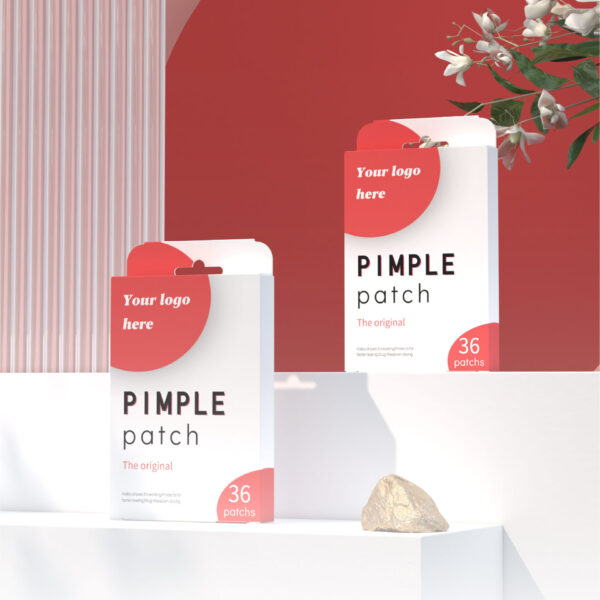
For the Spring niche, we offer “Seasonal Survival Kit” packaging options. Use pastel-colored backing films (lavender or mint) to visually signal “soothing” versus the clinical white or black of standard acne patches.4. Why Standard Sourcing Fails: A Comparison
Developing a new Active Ingredient (AI) patch with a traditional OEM is a nightmare of high Minimum Order Quantities (MOQs) and long lead times. If you want to test the “Spring Flush” market, you shouldn’t have to order 100,000 units to start.| Feature | Standard Factory | DOTDOT Factory |
|---|---|---|
| MOQ for Custom Formulation | 50,000 – 100,000 units | 1,000 units (Industry Benchmark Breaker) |
| Prototyping Speed | 4-6 Weeks | 7 Days Rapid Prototyping |
| Material Options | Standard Hydrocolloid Only | Biodegradable, Hydrogel, Anti-Redness Matrix |
| Barrier to Entry | High Capital Risk | Low Risk, High Agility |
5. Sourcing Checklist: Questions for Your Manufacturer
When procuring Azelaic Acid patches, transparency is non-negotiable. To ensure you aren’t getting a sub-standard product that will crystallize or lose efficacy, ask these three critical questions:- “Can you provide accelerated stability data?” Actives like Azelaic Acid can degrade or migrate out of the patch. Demand data showing the ingredient remains homogenous over 24 months.
- “Is this a Medical Device or Cosmetic formulation?” Regulatory classification matters. High-concentration actives can shift a product from cosmetic to drug class in some markets. DOTDOT provides full FDA/ISO 13485 certification support to navigate this.
- “What is the adhesion profile for compromised skin?” Spring-sensitive skin is fragile. Aggressive adhesives will cause damage upon removal. We use hypoallergenic, medical-grade adhesives specifically calibrated for sensitive skin barriers.